
Figuring out are e-bikes allowed in Naples sounds like it should be a yes-or-no question. It isn’t. Yes, e-bikes are generally allowed, but the part that actually affects your vacation is where you can ride, how fast your bike can go, and how careful you need to be in busy places near shops, crossings, and beach access points.
Are E-Bikes Allowed in Naples?
Yes, e-bikes are generally allowed in Naples. For most visitors, that means you can rent one and use it in many of the same places you’d use a regular bicycle.
Here’s the thing: permission is only the starting point. Naples is paying closer attention to bikes, e-bikes, scooters, Segways, and similar devices because shared spaces are busier than they used to be. So the real rulebook is less about “allowed or banned” and more about riding in the right place, at the right speed, with the right expectations.
If you’re planning a trip and just want the simple answer before booking a rental, use this: e-bikes are not a free pass to ride anywhere you want. Treat an e-bike like transportation, not like a beach toy, and you’ll already be ahead of most first-time visitors.
The short version for visitors
In plain English, e-bikes are allowed on many streets, bike lanes, and bike-friendly areas in Naples. Under Florida law, e-bikes are generally treated much like bicycles.
But you should not assume every sidewalk, boardwalk, shopping stretch, beach access area, or crowded pedestrian zone is automatically fair game. Naples already has local restrictions in some places, including sidewalks in business districts, shopping centers, and beaches, and city rules are still being reviewed.
That means your safest move is simple: check current city guidance, look for posted signs, and listen closely to the rental shop’s route advice before you roll out.
What Counts as an E-Bike in Florida
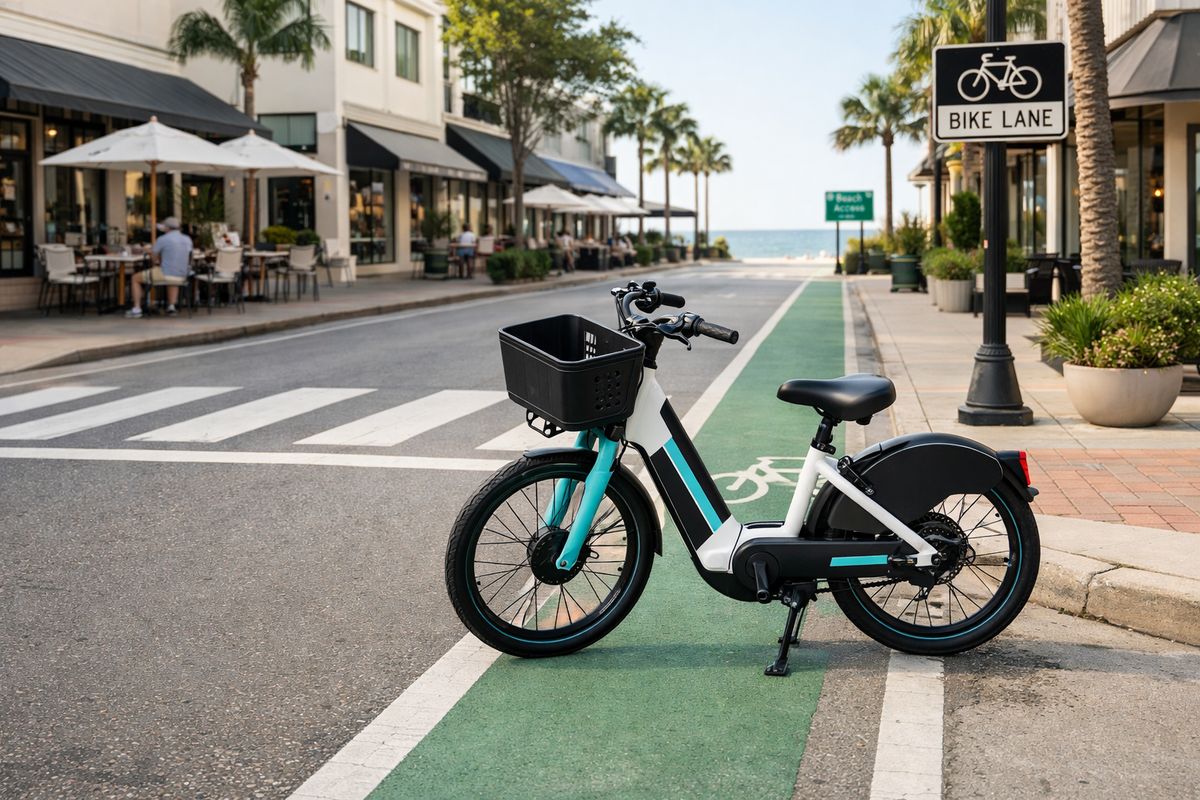
An e-bike is a bicycle with an electric motor that helps you pedal, or in some cases helps without much pedaling at all. It still looks and works like a bike. You sit like you would on a bike, steer with handlebars, and ride in bike spaces, not like you would with a golf cart or a moped.
That distinction matters because visitors often lump everything electric together. An e-bike is not the same as an electric scooter, a moped, or a street-legal golf cart. If you’re comparing rental options, think of an e-bike as a regular bike with a helpful tailwind built in.
The 3 e-bike classes explained simply
Florida uses the standard three-class system.
Class 1 e-bikes give you pedal assist only, which means the motor helps when you pedal, and stops helping at 20 mph. This feels the most like normal biking, just easier.
Class 2 e-bikes can also top out at 20 mph, but the motor can help without constant pedaling because the bike has a throttle. If you want a little less effort, this is often the easiest type to understand.
Class 3 e-bikes are faster. The motor helps while you pedal up to 28 mph, and that surprises a lot of visitors. A bike going 28 mph is still a bike legally, but it feels much closer to light road traffic than a leisurely cruise. Florida reporting commonly notes 28 mph e-bikes on streets, which is exactly why class matters more than many renters expect.
Why the class matters before you rent
A casual rider heading to lunch does not need the same bike as a confident rider covering longer distances on roads. That’s the whole point.
If your vacation plan is relaxed, short, and slow, a lower-speed e-bike will usually feel more comfortable and less stressful. If you want to cover several miles between neighborhoods, keep up with stronger riders, or avoid arriving hot and tired, more assist can make a lot of sense.
The catch is that extra speed changes the whole feel of the ride. A Class 3 bike can be great on open streets, but it can feel like too much in tighter, slower, shared areas.
Where You Can Usually Ride an E-Bike in Naples
Most visitors will use an e-bike on neighborhood streets, side streets, bike lanes, and everyday routes connecting shops, dining areas, and scenic parts of town. That’s where e-bikes tend to make the most sense.
Naples has the kind of short-to-medium trips that suit an e-bike well. A four- or five-mile errand run is completely normal for local bike users, and that same distance feels easy for a visitor heading from a rental stay to breakfast, shopping, or the beach area.
Streets, bike lanes, and shared road space
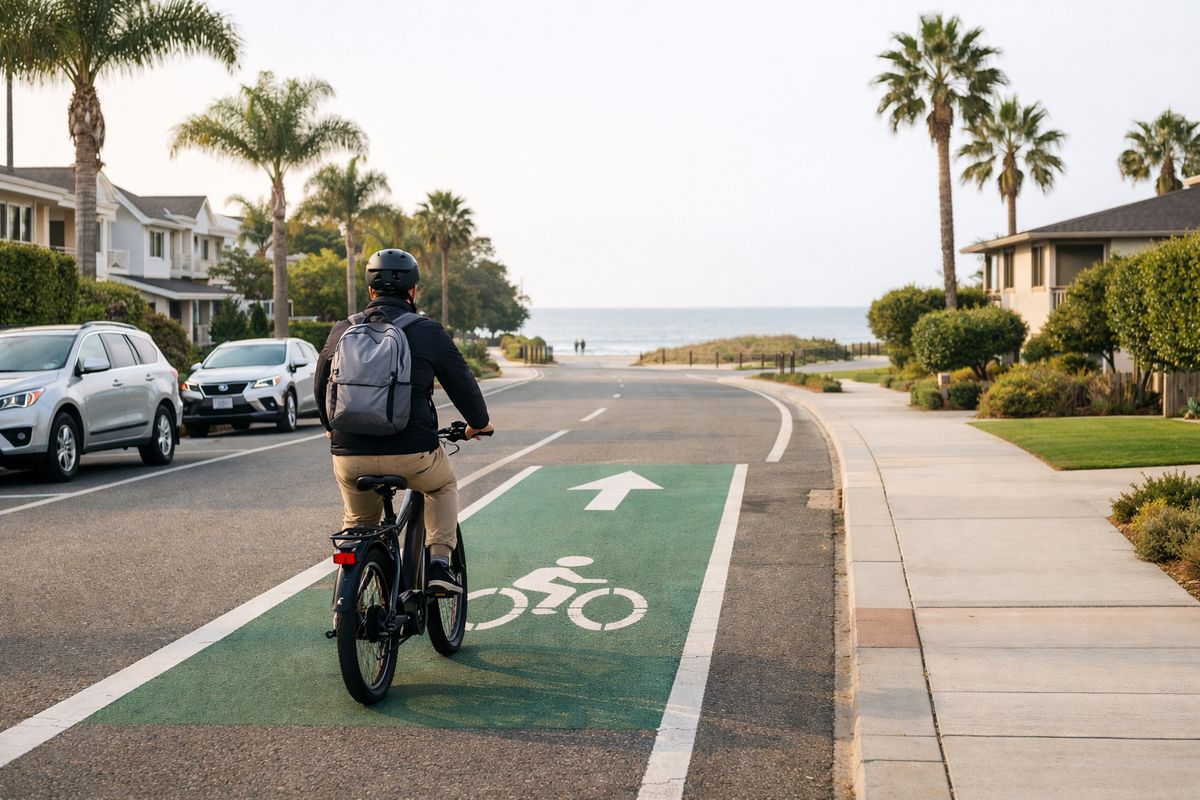
On streets and in bike lanes, you should ride your e-bike like a normal bicycle. Follow traffic direction, stop where you’re supposed to stop, and don’t drift between “pedestrian mode” and “vehicle mode” whenever it feels convenient.
That sounds obvious, but vacation mode makes people sloppy. An e-bike isn’t a resort cart. It belongs in the flow of bike traffic and road rules. If bike lanes are available, use them. If you’re on a road, ride predictably and give drivers no reason to guess what you’re about to do.
Paths, parks, and mixed-use areas
This is where the gray area starts. Some paths and recreation areas allow bikes and e-bikes with no issue. Others may have posted restrictions, speed expectations, or local rules that make access narrower than you’d expect.
So don’t ride by assumption. Ride by signage.
If a path is posted for bicycles, an e-bike is often fine. If a park path is crowded, narrow, or clearly designed for strolling rather than cycling, slow down and pay attention to what the space is telling you. In Naples, context matters almost as much as the written rule.
Sidewalks and crowded pedestrian areas: here’s the catch
This is the part visitors most often get wrong. Just because an e-bike is broadly treated like a bicycle does not mean sidewalk riding is smart, welcome, or clearly allowed everywhere.
Naples has existing code restrictions in some sidewalk-heavy commercial and beach areas, and enforcement can feel uneven because some terms in the code are still being clarified. That uncertainty is exactly why guessing is a bad plan.
In crowded zones, especially near shopping, beach access points, and places where foot traffic bunches up, slow way down. Yield early. Use an audible signal before passing. Florida micromobility rules require riders to yield to pedestrians, and that matters even more when your bike is electric. If the space gets tight, get off and walk. It’s faster than causing a scene.
Why Naples Is Paying Closer Attention to E-Bikes
Naples is not banning e-bikes. Naples is trying to catch up with how many different devices are now sharing the same public space.
That includes bikes, e-bikes, scooters, Segways, and similar micromobility devices. City officials are reviewing local code because rules written for one kind of sidewalk and one kind of bike no longer cover what’s actually happening on the ground. Clearer local rules are being discussed because enforcement gets messy when technology changes faster than city code.
Safety concerns behind local rule changes
The concern is simple: higher speeds plus crowded spaces plus inexperienced riders.
An e-bike can feel easy almost immediately, which is part of the appeal. But easy to start is not the same as easy to control well. Faster bikes need more stopping distance. Passing a walker at 18 mph is not the same as passing at 8 mph. Crossing a street on an unfamiliar rental while looking at traffic, tourists, and signs all at once gets complicated fast.
Medical research backs up that concern. One pediatric trauma study found e-bike injuries among young riders rose sharply over time, from 2% to 64% of trauma activations in the study period. Another bicycle injury study found collisions with vehicles were linked to more severe trauma, while helmet use was linked to less severe head injuries.
What that means for your trip plans
For your trip, this means two things.
First, rules may shift or be clarified, especially in busy areas. Second, enforcement may vary depending on exactly where you are riding. A calm neighborhood street is one thing. A packed pedestrian stretch at midday is another.
So don’t rely on a blog post written two years ago, or assume the person in front of you is riding legally just because nobody stopped that person. Check current city guidance right before your trip, then confirm your route with the rental company on the day you ride.
The Rules Visitors Most Often Get Wrong
Most confusion comes from treating all fun rental vehicles as interchangeable. They’re not.
An e-bike is more flexible than a golf cart in some ways, but it also asks more of you as a rider. You need to know where it belongs and how its speed changes the ride.
Assuming an e-bike can go anywhere a regular bike goes
This is the biggest mistake. Even where state law is broad, local rules and posted restrictions still matter. A path, sidewalk, or beach-adjacent space that looks bike-friendly may have local limits, especially in high-foot-traffic areas.
The trick is to stop reading the space emotionally. “It looks easy to ride here” is not the same as “riding is allowed here.”
Forgetting that speed changes everything
A little extra assist feels harmless until you need to stop quickly.
Think of it like moving through a grocery store. Walking down an aisle is easy. Pushing a cart too fast around a corner is where you clip somebody’s heel. An e-bike in a shared space works the same way. More speed means less margin for error, less time to react, and a much bigger chance of scaring somebody even if you avoid contact.
Thinking rentals come with the rules built in
A rental handoff may cover brakes, battery, and how to unlock the bike. It may not cover every local restriction, etiquette expectation, or route you should avoid at noon on a busy Saturday.
Ask before leaving the shop. Get specific. Ask which roads feel easiest, where sidewalk riding is a bad idea, where beach crowds create pinch points, what class the bike is, and how fast the assist kicks in. A two-minute conversation can save your whole afternoon.
How to Ride an E-Bike Safely in Naples
Good e-bike riding in Naples is mostly about judgment. Sun, traffic, visitors on foot, and shared spaces all pile on at once.
If you ride like you’re borrowing the space instead of owning it, you’ll usually make better decisions.
Wear a helmet, even if you only plan a short ride
A short ride to lunch can still involve a fast crossing, a distracted driver, or one awkward swerve around a curb cut. That’s enough.
Helmet use is worth it. Research on bicycle crashes found helmet use was linked to reduced head-trauma severity and lower ICU admission risk, and safety groups continue to recommend a properly fitted helmet for e-bike riders. If your rental includes one, take it. If it doesn’t, ask for one anyway.
Use bells, lights, and clear passing etiquette
Small tools do a lot of work. A bell, front and rear lights, and a quick audible heads-up make you far more predictable around walkers and slower riders.
In Naples, that matters. Shared spaces can go from open to crowded in one block. A simple “on your left,” a gentle bell, and a little patience prevent the weird close calls that ruin the mood of a vacation day.
Ride defensively around cars, crossings, and underpasses
The more serious crashes usually involve vehicles. That’s the hard truth.
Slow down before crossings. Make eye contact with drivers when you can. Don’t assume somebody turning right has seen you just because you’re visible in your own mind. If an underpass, driveway exit, or intersection feels confusing, treat it like a hazard, not a challenge.
Choosing the Right Rental for Your Vacation
Not every Naples trip needs an e-bike. Sometimes the better choice is the simpler one.
If you’re still deciding between an e-bike, a regular bike, or something else, the best option is the one that matches your actual plans, not the one that sounds the most fun in theory.
When an e-bike makes sense
An e-bike makes sense when you want to cover a few miles without arriving sweaty, keep up with a mixed-fitness group, or turn a scattered day into one easy ride. If your morning includes coffee, a stop near Fifth Avenue South, then a longer spin through calmer neighborhood streets before heading back, an e-bike can make that whole plan feel light and easy.
It also helps if someone in your group likes biking and someone else only sort of likes biking. Electric assist smooths out that mismatch.
When a regular bike may be the better call
If your plans are short, flat, slow, and close together, a standard bike may actually feel better. Less power means less stress in crowded areas. You hop on, pedal a little, stop often, and never think about assist levels or top speed.
That’s especially true if your route is mostly scenic wandering rather than covering ground.
What to ask before you book
Before reserving anything, ask what class the e-bike is, what its top assisted speed is, whether helmets are available, where the shop recommends riding, where the shop tells renters not to ride, and what happens if local rules change before your trip.
Those are the questions that matter. Not the paint color. Not the marketing name.
Quick FAQs About E-Bikes in Naples
Are e-bikes allowed on Naples sidewalks?
Do not assume yes everywhere. Some sidewalk areas in Naples already have restrictions, especially in business, shopping, and beach-related zones. Even where riding is not clearly prohibited, pedestrian safety comes first. In busy areas, slow down dramatically or walk the bike.
Do you need a license for an e-bike in Florida?
In general, no. Current Florida rules described in reporting say e-bike riders do not need a driver’s license or insurance for standard street-legal e-bikes. That makes e-bikes easy to access, but it also means you should not mistake easy access for low responsibility.
Are helmets required?
Florida requires helmets for riders under 16 on e-bikes. For adults, the legal answer can be different from the smart answer. The smart answer is to wear one, every time.
Can kids ride e-bikes?
Kids and teens are where safety concerns get sharper. Match the bike to skill level, age, and judgment, not just height. A faster e-bike can be too much for an inexperienced rider, especially near traffic or in crowded shared areas. If a rental company has age rules, take them seriously.
What’s the safest next step before your trip?
Check the latest Naples city guidance, then call your rental company and ask exactly where its e-bikes are meant to be ridden. Do that this week, before you book anything, and the whole decision gets much easier.