
Planning a beach vacation sounds easy until you hit the rental page and realize “bike” now comes in several versions. In the e bike vs regular bike debate, the short answer is simple: for most vacations, an e-bike is the better pick because it helps you see more, ride farther, and stay comfortable in the heat, while a regular bike still wins for short, flat, lower-cost rides.
Quick Overview of E-Bike vs Regular Bike for Vacation
If your vacation includes cruising to breakfast, riding to the beach, stopping for lunch, and heading out again for sunset, an e-bike usually fits that day better. You get help when the ride gets long, windy, or hotter than expected, which means the bike supports your plans instead of quietly shrinking them.
A regular bike keeps things simple. It is lighter, cheaper, familiar, and great if your route is short and your goal is partly exercise. For a quick spin near your hotel or a relaxed morning loop on flat streets, that simplicity is hard to beat.
But vacation riding is not the same as riding at home. In places like Naples and Marco Island, the route might look easy on a map and still feel longer in the afternoon sun. That is where the big tradeoff shows up: e-bikes make sightseeing easier and more forgiving, regular bikes make the ride more active and budget-friendly.
Here is the quick verdict: if you want comfort, range, and an easier day for everyone in your group, choose the e-bike. If you want a basic ride for a short outing and do not mind putting in more effort, choose the regular bike.
What an E-Bike and a Regular Bike Actually Feel Like to Ride
A regular bike is exactly what you think it is: you pedal, the bike moves, and every bit of speed comes from your legs. That can feel satisfying and familiar, especially on flat roads with a nice breeze at your back.
An e-bike still feels like a bike, not a scooter. The difference is pedal assist, which means the motor adds help as you pedal. On some models, you can pick a low, medium, or high assist level. So instead of pushing hard to get moving after a stop sign, you glide forward with less strain. It feels a little like riding with a constant tailwind.
That on-vacation difference matters more than people expect. A regular bike gives you an active spin. An e-bike gives you an easier glide. If your dream vacation ride involves looking at palm-lined streets and water views instead of thinking about your thighs, you will notice that difference right away.
Effort and Comfort
This is where e-bikes pull ahead for most travelers.
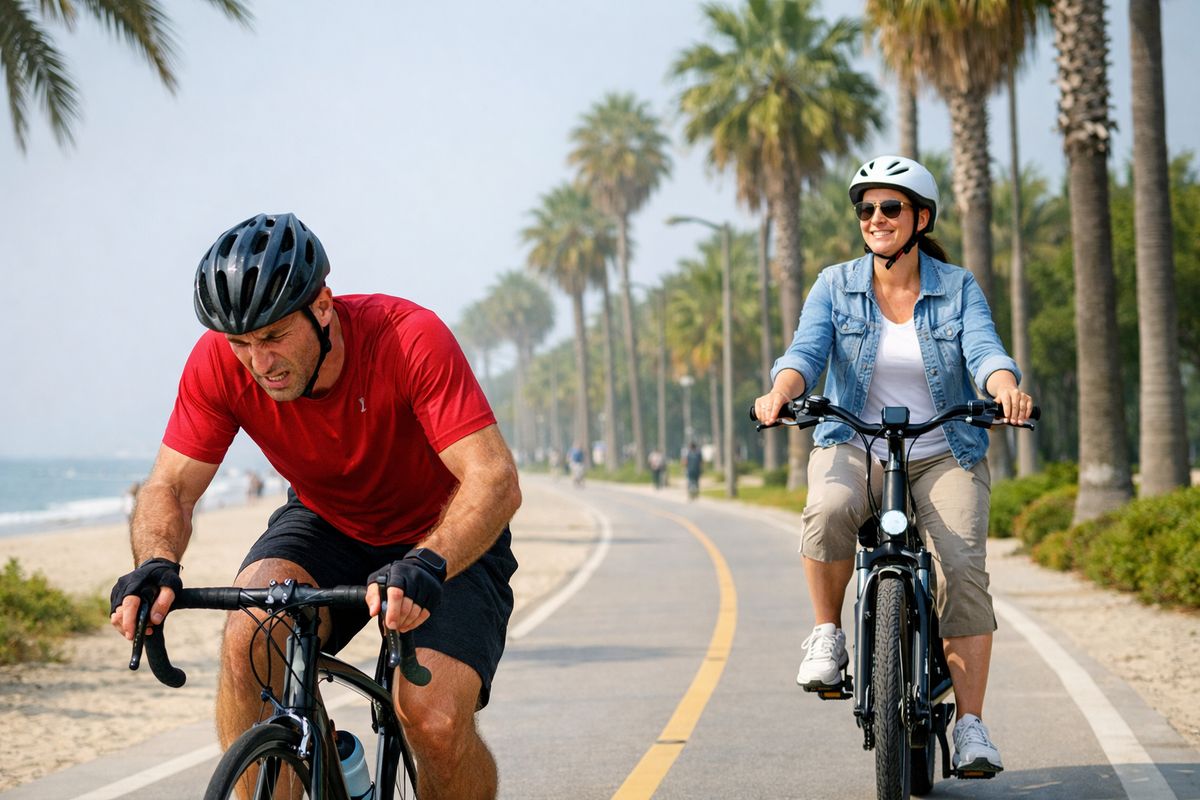
A regular bike asks more from you every minute. In mild weather, that can be great. In Florida heat, with sun bouncing off the road and a little coastal wind working against you, it can turn a pleasant ride into a sweaty chore. You may still enjoy it, but you will feel it in your legs, your back, and honestly your mood.
An e-bike takes the edge off all of that. You still pedal, but you do not need to grind through every stretch. If you ride near Gulf Shore Boulevard and hit that point where your shirt is sticking to your back and lunch suddenly feels very far away, pedal assist starts to feel less like a luxury and more like the whole reason your day stays fun.
That matters even more if your group has different fitness levels, older riders, sore knees, or anyone who likes biking but does not want the ride to become a workout session. Comfort-first vacations usually favor e-bikes, and that is not laziness. It is good planning.
Speed and Distance
E-bikes change the size of your day.
Most regular vacation riders cruise somewhere around 10 to 18 mph, while e-bikes typically offer assisted speeds of 20 to 28 mph depending on the class and local rules. In practical terms, that means 20 to 28 mph can turn a “maybe later” destination into an easy add-on.
On vacation, speed is not really about racing. It is about freedom. With an e-bike, a beach hop, a coffee stop, a lunch detour, and a scenic ride back can all fit into one outing without anyone fading halfway through. A regular bike can absolutely handle that too, but only if your group is comfortable spending more energy to cover the same ground.
Research also shows e-bike users tend to take longer trips. That tracks with real vacation behavior. If the ride feels easy, you keep going. If it starts feeling like work, you start trimming plans.
Hills, Headwinds, and Tougher Terrain
Naples and Marco Island are not mountain towns, but flat does not always mean easy.
The catch is wind. Coastal routes can feel totally different on the ride back. A bridge, a long open stretch, loose sand nearby, or a return ride after a full day out can make an easy morning spin feel much tougher by afternoon. That is when e-bikes clearly earn their spot.
With a regular bike, you absorb every bit of resistance yourself. With an e-bike, the motor smooths out those annoying moments that chip away at your energy. Even a steeper incline can feel much easier with assist, and some guides note that a 10% grade can feel surprisingly manageable on an e-bike.
For vacation riding, that means fewer moments where you regret the route. And that alone can be worth it.
Exercise and Health Benefits
If your main goal is exercise, the regular bike wins per mile. That part is straightforward. You work harder, your heart rate stays higher, and your legs do more.
But here’s the thing: e-bikes still count as real movement. A large study across seven European cities found similar physical activity between e-bike users and conventional cyclists over the course of a week, partly because e-bike riders often go farther and ride more often. That is a very vacation-friendly point. The easier bike is often the bike you actually keep using.
So if you want a harder workout on purpose, go regular. If you want to stay active without turning every outing into effort, go e-bike. No guilt trip needed. A vacation ride that happens twice a day beats the ambitious ride you skip after breakfast because it already feels too hot.
Ease of Use and Learning Curve
A regular bike wins on instant familiarity. You hop on, pedal, brake, and go. No settings. No display. No wondering which assist mode you picked.
An e-bike adds a tiny learning curve. There may be a power button, assist levels, maybe a throttle on some models, and a heavier feel at low speed. For the first five minutes, that can seem like more bike than you asked for.
Then it usually clicks.
Most vacation riders get comfortable with pedal assist quickly because the core experience is still very natural. You pedal, and the bike helps. That is it. The only real adjustment is remembering that the bike may accelerate faster and carry speed more easily than a regular bike.
If you feel nervous about motorized anything, a regular bike may feel calmer at first. But for most people, e-bikes stop feeling “technical” almost immediately.
Weight, Handling, and Parking
This is one of the few areas where regular bikes have a clear and lasting advantage.
A regular bike usually weighs about 15 to 35 pounds. An e-bike often lands around 40 to 70 pounds. That weight changes everything once you are not actively riding. Walking it through a crowded area, turning it around, lifting it over a curb, or parking it outside a café all feel easier on a regular bike.
An e-bike can feel a bit like a small suitcase with handlebars when the motor is not helping. Not impossible. Just more awkward.
If your vacation includes carrying the bike up stairs, lifting it onto a rack, or squeezing it into a tight storage spot, the regular bike is the simpler choice. If your riding is mostly door-to-door on level ground with easy parking, the extra e-bike weight is much less of a problem.
Safety and Control
The label alone does not decide safety. Your speed, your route, traffic, your confidence, and how you behave matter more.
That said, the tradeoff is real. E-bikes can move faster and weigh more, which means longer braking distances and more force in a crash. Some injury sources note more severe injuries can happen when e-bike crashes occur, mainly because of speed and heavier frames.
At the same time, the picture is not one-sided. A 2026 Oslo study found lower overall injury risk for e-bikes than conventional bikes when adjusted for distance traveled, at least outside winter conditions. So no, e-bikes are not automatically more dangerous in every setting.
For vacation riding, the practical advice is simple: ride at a pace that matches the path, brake earlier, wear a helmet, and do not treat pedal assist like permission to fly past everyone. A careful rider on an e-bike is usually safer than an overconfident rider on any bike.
Rules, Paths, and Vacation Logistics
This part trips people up because bike rules are not the same everywhere.
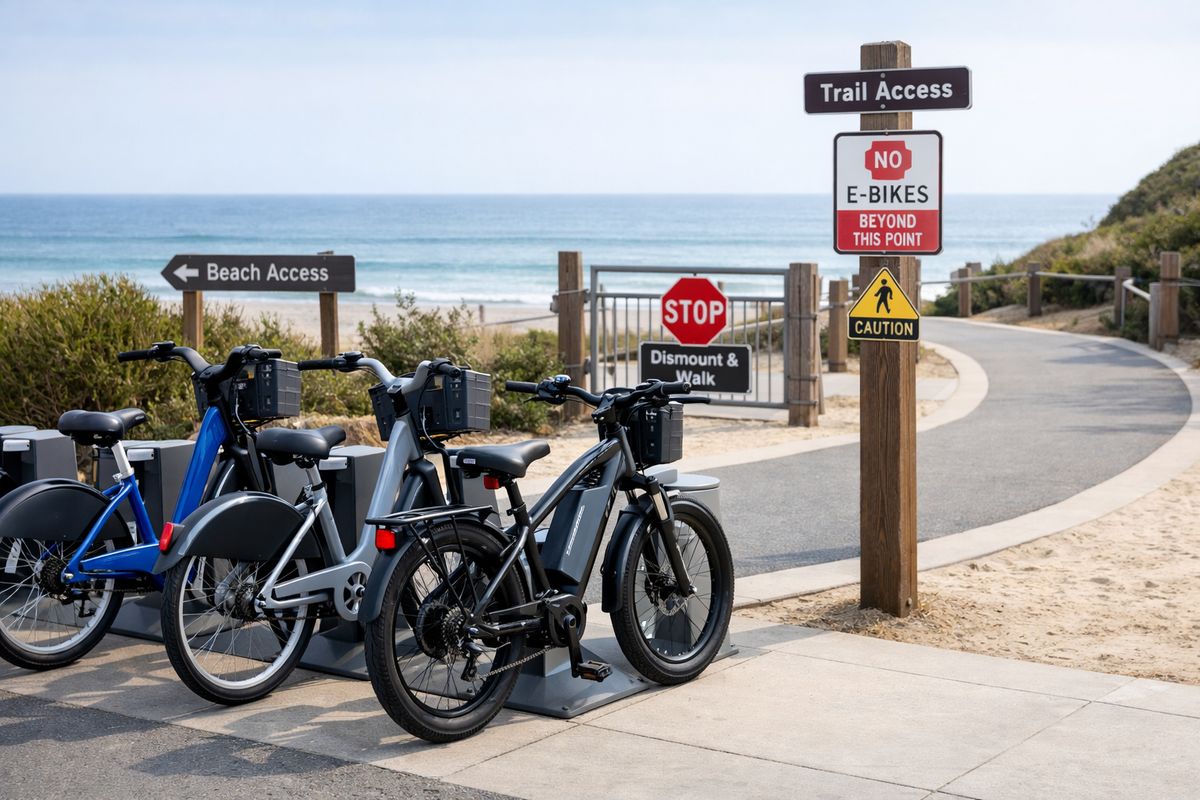
E-bikes come in classes. Class 1 usually means pedal assist up to 20 mph. Class 2 adds a throttle and also tops out around 20 mph. Class 3 can assist up to 28 mph, but access rules are often stricter on certain paths or shared-use routes. Some areas welcome Class 1 bikes almost anywhere regular bikes can go. Others are pickier.
That means your rental company matters. Before you assume your bike can go everywhere, check local rules for bike paths, beach access areas, helmets, age limits, and where each e-bike class is allowed. If your day depends on a scenic shared path, that detail matters.
Regular bikes are easier here because they are rarely the source of confusion. E-bikes add one more vacation logistics item: battery charge. Most rentals arrive ready to go, and many e-bikes can cover roughly 20 to 80 miles per charge, which is plenty for sightseeing. Still, if you are planning an all-day ride with lots of assist, charge level is worth noticing before you leave.
Rental Cost and Overall Value
Regular bikes are cheaper. That is the cleanest argument in their favor.
In general, regular bikes cost less to buy and less to rent, while e-bikes sit in a much higher price band, with starting around $800 for ownership and climbing fast from there. On vacation rentals, that difference shows up as a premium for comfort and range.
Is it worth paying more? Usually yes, if the bike is a meaningful part of your trip. If you want one quick cruise, no. If you want to use the bike to replace short drives, see more of town, or keep your whole group happy for longer outings, the extra cost often pays back in a better day.
That is the trick with vacation value. The cheapest rental is not always the best deal if it leaves you tired, sweaty, or done riding by noon.
Reliability, Maintenance, and Mid-Trip Hassle
A regular bike is simpler, and simplicity is a real vacation advantage. Fewer systems mean fewer things to go wrong. Tires, brakes, chain, gears. That is basically the list.
An e-bike adds battery, motor, display, and wiring. On a good rental, none of that should bother you. On a bad rental, it absolutely can. That is why the condition of the bike matters more than the category.
Before you ride off, check the brakes, tire pressure, seat adjustment, and overall feel. On an e-bike, also check the charge level and make sure the assist engages smoothly. Long-term, e-bikes do have extra maintenance concerns, including battery replacement every 3 to 5 years, often costing $200 to $600, but that matters more for owners than short-term renters.
For a vacation rental, the best bike is the one that feels ready to go without fuss.
Best Choice for Different Vacation Styles
Vacation style is what actually decides this.
If your trip is built around short beach rides, simple neighborhood loops, and keeping costs down, a regular bike makes sense. If your trip includes sightseeing, restaurant stops, longer scenic routes, or mixed fitness levels, the e-bike is usually the smarter match.
E-bikes are especially good for couples where one person rides more confidently or has stronger legs. They are also great for older riders who want the fun of biking without the strain, and for anyone who wants to keep up without turning the ride into a test.
Regular bikes still shine for active mornings, exercise-focused rides, and very short, flat outings where paying extra for motor assist feels like overkill.
Choose an E-Bike If…
Choose an e-bike if your vacation day includes real mileage, warm weather, multiple stops, or a group with uneven energy levels. It is the better pick for comfort-first sightseeing, longer loops, and anyone who wants to enjoy the ride without arriving exhausted. It is also the best choice if sore knees, low stamina, or simple vacation mode makes “easy” sound a lot better than “earned.”
Choose a Regular Bike If…
Choose a regular bike if your rides will be short, flat, and simple. It is the better option for tighter budgets, workout-focused outings, and anyone who wants the classic feel of biking without extra controls, battery concerns, or heavier handling. If you are mostly cruising a couple of miles and heading back, the regular bike does the job just fine.
E-Bike vs Regular Bike: Which Is Better for Vacation?
E-bikes are better for most vacations. That is the verdict.
You get more comfort, more range, less sweat, and a much easier time keeping the whole group happy. For places built around casual exploring, scenic detours, and sunny weather, that matters more than the purity of an all-leg-powered ride.
Regular bikes are still the better choice for short, flat, budget-friendly trips where the ride itself is the workout. But for the average vacation day, especially in places like Naples and Marco Island, the e-bike is the one more people end up being glad they picked.
Try This Before You Book
Map one realistic vacation day this week: breakfast, beach, lunch, and sunset. Check the distance, think about the likely heat, and decide whether you want that route to feel like a workout or a glide. That one small test will usually make your choice obvious.