
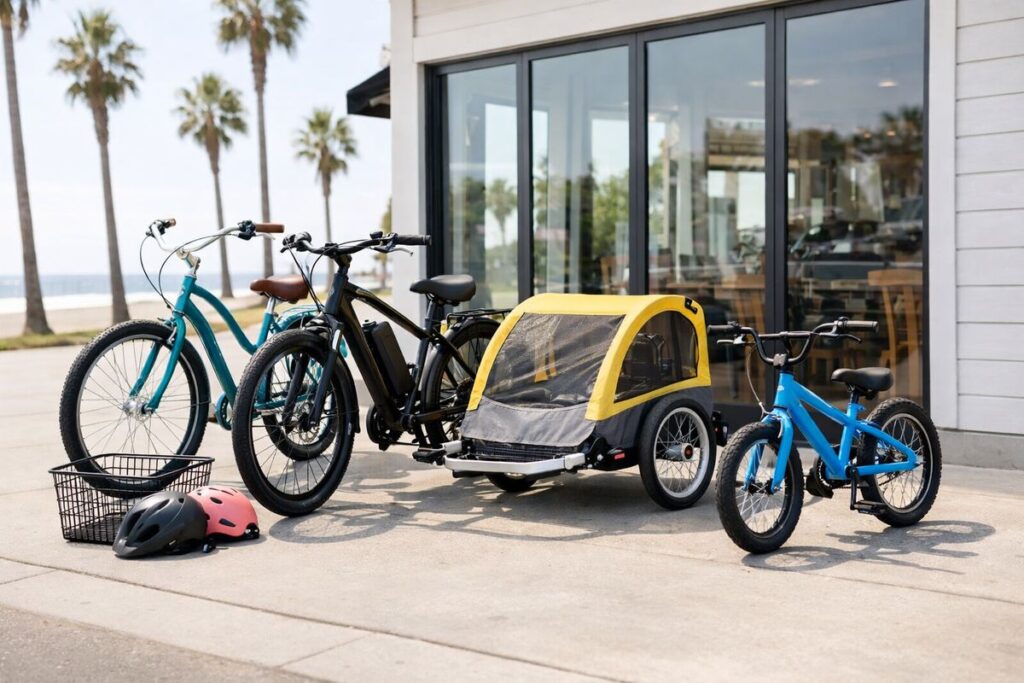
A tandem bike rental sounds like easy vacation fun, right up until you picture two people trying to start at the same time in flip-flops outside a condo. Here’s the short version: a tandem bike rental can be a great pick for families in Naples or Marco Island, but only if your riders are comfortable working together and your plans lean more toward scenic cruising than all-day transportation.
Quick verdict on tandem bike rental for families
A tandem is worth booking if your trip includes relaxed rides on flat paths, one rider is confident steering, and the second rider is happy to pedal along without needing full control. For couples and older kids, that setup can be a blast.
It’s not the easiest default family rental, though. If your group wants flexibility, extra storage, or everyone moving at their own pace, separate cruisers, an e-bike, or a trike usually make more sense.
Tandem bike rental at a glance
Most tandem rentals include a two-person bike, basic safety gear, and a lock. Some shops also include a basket, delivery, or comfort upgrades, but that varies more than you’d think. The catch is that a tandem isn’t just “two bikes stuck together.” It rides longer, turns wider, and needs both riders to stay in sync.
Compared with a standard cruiser, a tandem takes more coordination but can feel steadier once you’re moving. Compared with an e-bike, it asks more from your legs and gives you less help if one rider gets tired halfway through the ride.
What a tandem bike is in plain english
A tandem is one bike with two seats, two sets of pedals, and one shared ride. The front rider steers, brakes, and watches the road. The rear rider pedals and follows the lead.
That’s different from a surrey, which is the larger multi-seat pedal cart you’ll see in some beach areas. It’s also different from a trike, which has three wheels and usually feels more stable at low speed. And it’s definitely not a side-by-side bike. If you’re booking a tandem, you’re booking one long bike that needs teamwork.
Common rental specs families should check
This is where small details matter. Check the frame size, rider height range, and total weight limit before you reserve. A tandem that technically fits two adults can still feel cramped if the seat posts don’t adjust enough.
Also look at gears, storage, and what comes with the rental. A few gears are helpful even on flat roads, especially when starting from a stop. Helmets and locks are usually included, but baskets are hit or miss. If sizing is already confusing, it helps to brush up on how bike fit works for adults before booking anything longer than a quick beach spin.
Booking and pickup: what the setup experience feels like
The booking side is usually simple. The actual setup matters more.
A good rental experience feels smooth from reservation to rollout, especially when you’re already juggling check-in times, dinner plans, and beach gear. Tandems need a little more explanation than a standard cruiser, so a quick handoff in the parking lot isn’t always enough.
Online reservation, waivers, and delivery options
Most shops let you reserve online, sign a waiver, and choose pickup or delivery. Delivery is a big deal on vacation because it saves you from spending half an afternoon driving to a bike shop, parking, and loading a long frame into a vehicle that probably isn’t built for it.
If you’re staying in Naples or Marco Island for several days, condo or house delivery is often the easiest route. For broader trip planning, it helps to compare local rental options around Marco Island before locking into one type of bike too early.
First ride check before you leave the shop
Before you head out, check seat height, brakes, tire pressure, and how the bike feels when both riders are on it. That first start tells you a lot. If the front rider can’t get a clean push-off or the rear rider feels too stretched out, fix it before leaving.
This matters even more on a tandem because awkward little problems get amplified. It’s much better to wobble once in a quiet lot than halfway onto a path near the Gordon River Greenway with other riders coming through.
Comfort and ride quality for adults and kids
For short vacation rides, tandems can be surprisingly comfortable. For longer outings, comfort depends less on the seat padding and more on whether your two riders naturally match pace.
On flat coastal routes, the ride itself feels smooth enough. The challenge is rhythm. If one rider keeps pedaling while the other wants to coast, you’ll notice it right away.
How the front and rear seats feel different
The front seat does the real work. That rider steers, watches turns, handles stops, and sets the tone for the whole ride. If you like being in control, that’s the better spot.
The rear seat is easier in one sense because there’s no steering. But it also asks for trust. You’re pedaling without seeing every crack, curb, or turn as clearly. For an older kid or a less confident adult, that can be reassuring. For somebody who hates giving up control, not so much.
Is a tandem comfortable for a casual vacation ride?
Yes, if your ride is casual and your route is flat. Naples and Marco Island are good places for that kind of ride. You’re not grinding up hills. You’re cruising past palms, side streets, and beach access points at an easy pace.
But here’s the thing: a tandem stops being fun fast if one rider isn’t into pedaling. It feels a bit like pushing a shopping cart with one sticky wheel. Technically manageable, not exactly relaxing.
Handling, safety, and the learning curve
This is the section that decides the whole rental for most families. Tandems aren’t dangerous by default, but they do have a learning curve.
The first ten minutes can feel awkward. After that, most riders settle in. The trouble starts in stop-and-go areas where you have to restart often, steer around people, or make tight turns.
Starting, stopping, and turning without the drama
Starting is the hardest part. The front rider needs a clean launch while the rear rider stays ready to pedal smoothly, not mash the pedals all at once. Stopping takes communication too, because two bodies shift weight differently than one.
Turning is easier once you’re moving, though the bike needs more space than you expect. Picture trying to park a long grocery cart instead of a hand basket. Same basic idea, just less nimble.
Where tandems work best in naples and marco island
Tandems work best on flatter neighborhood streets, paved paths, and slower sightseeing routes. They’re great for a relaxed cruise where you want to stay together and enjoy the ride instead of racing around.
They’re less ideal in crowded beach districts, tight parking areas, and anywhere with constant stopping. If your day involves lots of hopping between shops and restaurants, a tandem can start to feel bulky. For family outings centered on easy cruising, this kind of shared bike day setup makes a lot more sense than using one as your main vacation vehicle.
Family practicality: is one tandem enough?
Usually, no. For most families, one tandem works best as part of the mix, not the entire solution.
A tandem solves the “ride together” problem for two people. It doesn’t solve cargo, extra seats, or independent mobility for a bigger group. That’s where expectations can get off track.
Best family setups for different group sizes
For couples, a tandem is easy to recommend if both of you are active enough for a casual ride. For one adult and one older kid, it can work really well because the adult controls the bike while the kid still gets to join in.
For families with teens or mixed ages, the better move is often one tandem plus one or two separate bikes. That gives you the fun of the shared ride without turning the whole outing into a coordination exercise.
Tandem vs standard bikes, e-bikes, and trikes
Standard bikes are simpler, period. Everybody gets independence, parking is easier, and nobody has to match pedal timing. E-bikes are even easier if your group is worried about effort or heat. Trikes trade speed for stability and can be a smart pick if balance is a concern.
If you’re still comparing fits, checking a quick sizing reference for different riders can help you avoid renting a bike that feels wrong before the first mile.
Storage, gear, and everyday convenience
Storage is the part people forget about until towels, water bottles, and sunscreen start piling up. A tandem does not give you double the cargo room just because it has two riders.
It’s better for fun rides than practical errands.
What you can actually bring with you
You can usually bring the basics: water, a small bag, maybe a towel or light beach gear if there’s a basket or rear rack. Beyond that, space gets tight quickly.
Think of it like sharing one closet on vacation. It works if everybody packs light. It gets messy if you want room for souvenirs, snacks, flip-flops, extra layers, and a full beach setup.
Parking and locking up at shops, beaches, and restaurants
Parking a tandem is doable, just less graceful. The longer frame takes more space at bike racks, and it can be awkward in crowded spots near restaurants or beach entrances.
If your day includes lots of short stops, that extra hassle adds up. For one long ride with a couple of planned breaks, it’s fine.
Pros and cons of tandem bike rental
A tandem is memorable, fun, and a little goofy in the best way. It’s also less practical than it looks online.
Pros
The fun factor is real. You get a shared ride, an easy sightseeing pace, and a good fit for flat vacation areas. It’s also nice for a less experienced rear rider who wants to join without steering.
Cons
Coordination is the big downside. Storage is limited, handling feels awkward at first, and one tired rider changes the whole ride. That’s why a tandem is best as a planned experience, not the automatic family default.
Tandem bike rental pricing and value
Price matters, but value matters more. A tandem can look like a deal compared with renting two bikes, though that only holds up if you actually enjoy using it.
If the bike sits outside your rental after one awkward spin, it wasn’t a bargain.
Typical rental rates and What’s included
Rates usually come in hourly, daily, or weekly options. Daily and multi-day pricing often makes more sense for vacationers. Helmets and locks are commonly included, while baskets, delivery, and specialty add-ons may cost extra.
Read the fine print. A low base rate can climb once delivery fees or gear charges get added.
Is it worth the money for your vacation?
Yes, if you want a fun shared ride for a couple of scenic outings and you already know your pair will get along on one bike. No, if you need an all-purpose family transportation fix.
The direct call is simple: book a tandem for the experience, not for efficiency.
Who a tandem bike rental is best for
Tandems are for a specific kind of vacationer, not everybody with a beach rental and an afternoon to fill.
Best fit
The best fit is couples, one adult with an older kid, and families planning short scenic rides on flat routes. If your ideal outing is an easy cruise, a stop for coffee, and a slow roll back before sunset, a tandem lines up nicely.
Who should skip it
Skip it if your group includes very young kids, anybody with balance concerns, or anybody who strongly wants independent control. It’s also a poor fit if you need a lot of cargo space or plan to make frequent stops in crowded areas.
Final rating and bottom line
A tandem bike rental gets a 7.5 out of 10 for the right vacation. It’s fun, memorable, and great on flat scenic routes. It’s also less flexible, less practical, and harder to handle than separate bikes.
If your trip style sounds more like cruising than commuting, a tandem is worth trying once. Before you reserve, do one smart thing: match the bike to your least confident rider, not your most adventurous one.
Frequently asked questions
Is a tandem bike rental good for beginners?
Yes, but only if one rider is confident steering and both riders are comfortable pedaling together. A tandem is beginner-friendly on flat, quiet routes, not in busy stop-and-go areas.
Can a child ride on a tandem bike?
An older child can, especially in the rear seat with an adult steering in front. Very young kids usually need a different setup, since tandems aren’t the easiest match for small riders.
Are tandem bikes harder to ride than regular bikes?
At first, yes. Starting, stopping, and turning take more coordination. Once you get moving, the ride feels much easier and more natural.
Is a tandem cheaper than renting two bikes?
Sometimes, but not always by much. The better question is whether you want the shared experience enough to give up the freedom of two separate bikes.
How much stuff can you carry on a tandem bike?
Usually just the basics, water, a small bag, and maybe light beach gear if the bike has a basket or rack. It’s not a great choice for hauling a full beach-day setup.
Where should you ride a tandem in naples or marco island?
The best routes are flat neighborhood streets, paved paths, and scenic areas with fewer stops. Crowded beach districts and tight traffic spots are where tandems feel clumsy fastest.