
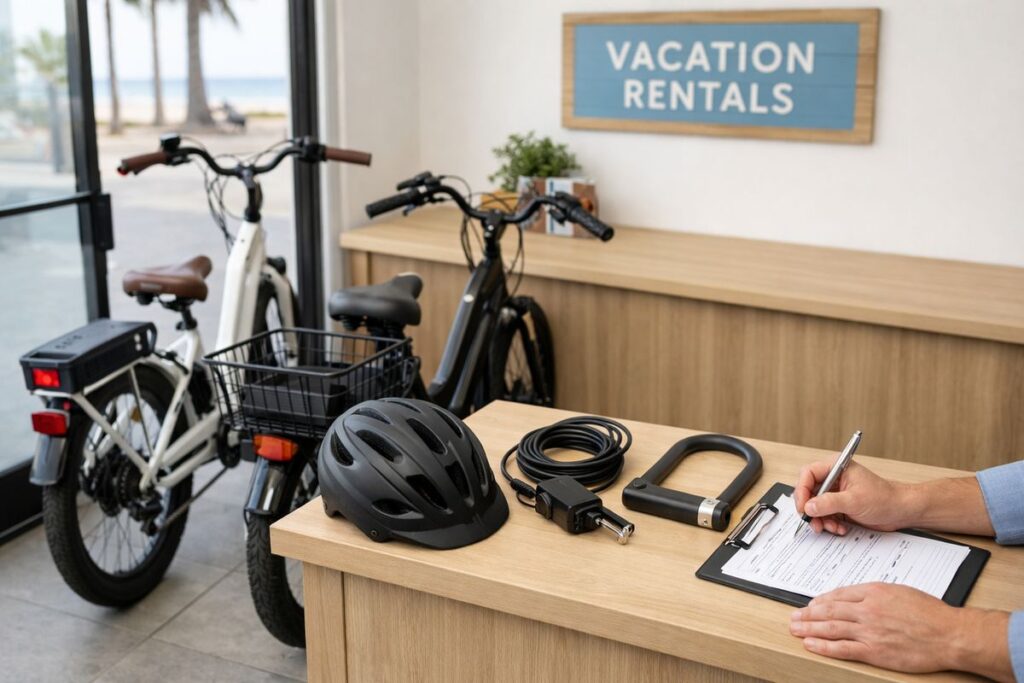
A bike rental deposit is the extra amount tied to your booking to cover damage, theft, late returns, or missing gear. If you’ve ever found a beach cruiser that looked cheap, then watched the total jump at checkout, this is usually where the confusion starts.
What a Bike Rental Deposit Actually Is
A bike rental deposit is not the bike price. It is usually a temporary hold on your card, or sometimes an upfront charge, that protects the shop if the bike comes back late, damaged, or missing accessories.
Think of it like a hotel incidentals hold. The money is there as backup, but that does not always mean the shop keeps it. In many cases, a temporary card hold of $100 to $200 is a common setup, though e-bikes and premium rentals can run higher.
Deposit vs. Hold vs. Fee
Here’s the thing: these words sound similar, but they do not mean the same thing.
A deposit is often refundable if nothing goes wrong. A hold is usually a temporary authorization on your credit card that falls off after the return is processed. A fee is money you pay and usually do not get back. That difference matters more than the price itself.
Some shops explain this clearly before checkout. Others bury it in the rental policy. If the booking page says “due today,” that still does not tell you whether the charge is refundable. You have to check.
What Usually Gets Added to the Base Rental Price
The base rate is only the starting point. A bike that rents for $30 a day can end up costing much more once delivery, accessories, and protection extras are added. If you’re comparing options in Naples or Marco Island, it helps to look past the sticker price and focus on the full number, the same way you’d compare airline tickets after baggage fees.
Common Add-Ons You May See
The usual extras are simple: helmets, locks, baskets, child seats, phone mounts, and upgraded bike models. Delivery and pickup can also raise the total. For example, one Marco Island rental page lists a delivery charge of $25, with pickup included, which is handy but still separate from the bike rate.
Some shops bundle the basics. Others charge item by item. That is why comparing total vacation riding costs is more useful than comparing the daily bike rate alone.
Protection Plans and Damage Waivers
A damage waiver is not the same thing as a deposit. It is an add-on that may reduce what you owe if the bike gets damaged. Sounds great, and sometimes it is.
The catch is in the exclusions. Many waivers do not cover theft, reckless riding, lost keys, or missing locks and baskets. If your child seat disappears or your charger never makes it back, the waiver may do nothing for you. For a basic cruiser, that add-on can just pad the bill. For an e-bike or longer rental, it can make more sense.
The Surprise Charges That Catch Vacationers Off Guard
Most frustration does not come from the bike itself. It comes from charges that show up after the ride, when you’re tired, sandy, and already thinking about dinner.
Late Returns, Cleaning, and Missing Gear
Late fees are a classic gotcha. Picture getting back from a sunset ride near Naples Pier, only to realize the shop closed fifteen minutes ago. Some rental policies charge after-closing return fees, and one industry example shows a $50 late fee for returns after closing time.
Cleaning charges can also appear if the bike comes back packed with sand or grime. Then there are the smaller misses that add up fast: lost keys, missing locks, flat tire disputes, or a basket strap that snaps. Premium bikes can carry much steeper replacement costs, which is one reason figuring out if an electric bike fits your trip before booking can save money later.
Reservation Fees, Membership Fees, and Cancellation Costs
Not every upfront payment is a deposit. Some charges are reservation fees that hold your bike for a date. Some are prepayments. Some are membership-style charges, and those are often nonrefundable.
That distinction shows up in other bike access models too. For example, some bike memberships are non-refundable, which is completely different from a refundable security hold. If a shop charges you at booking, make sure you know whether that payment comes back if you cancel, shorten the rental, or never pick up the bike.
How to Read a Rental Policy Without Getting Stuck in Fine Print
Rental policies start to blur together fast, especially when you’re comparing a cruiser for a beach day, an e-bike for a longer ride, and maybe even another option for the rest of the group. The trick is to ignore the marketing copy and go straight to the money language.
The 6 Things to Check Before You Book
Check six things before you hit reserve: the deposit amount, whether it is a hold or real charge, what comes with the bike, what can trigger deductions, when refunds or releases happen, and whether a helmet and lock are included. The best shops spell this out before checkout, not after. If a policy is vague, assume the final total will be less friendly than the ad.
How to Choose the Right Rental Without Overpaying
The right bike can lower surprise costs because you are less likely to swap mid-trip, add battery support, or upgrade after pickup. Cheap is not always cheaper.
Match the Bike to Your Day, Not Just the Sticker Price
If your plan is a short cruise to the beach and lunch nearby, a standard bike may be plenty. If your route includes longer distances, heat, or bridge crossings, an e-bike can feel worth the higher upfront rate. A trike can be more comfortable if balance is a concern, and a golf cart alternative may make more sense if your group is carrying coolers, kids, or both.
Before you reserve, ask for the full out-the-door price, including the bike rental deposit and every add-on. One clear number beats a cheap teaser rate every time.
Frequently Asked Questions
Is a bike rental deposit always refundable?
Usually, yes, if it is a true deposit and the bike comes back on time, undamaged, and with all accessories. But a fee or reservation charge is often not refundable.
How long does a card hold take to disappear?
It depends on the shop and your card issuer. Some holds drop in a few days, while others can take longer after the return is processed.
Do damage waivers replace the deposit?
Not always. A shop may still place a deposit hold even if you buy a waiver, because the waiver may only reduce certain damage costs.
What happens if you return the bike late?
You can be charged an extra hourly fee or a flat late fee, especially if you miss closing time. That amount may be taken from your deposit or charged separately.
Are helmets and locks usually included?
Sometimes, but not always. You should check before booking because those small extras can change the total more than expected.