
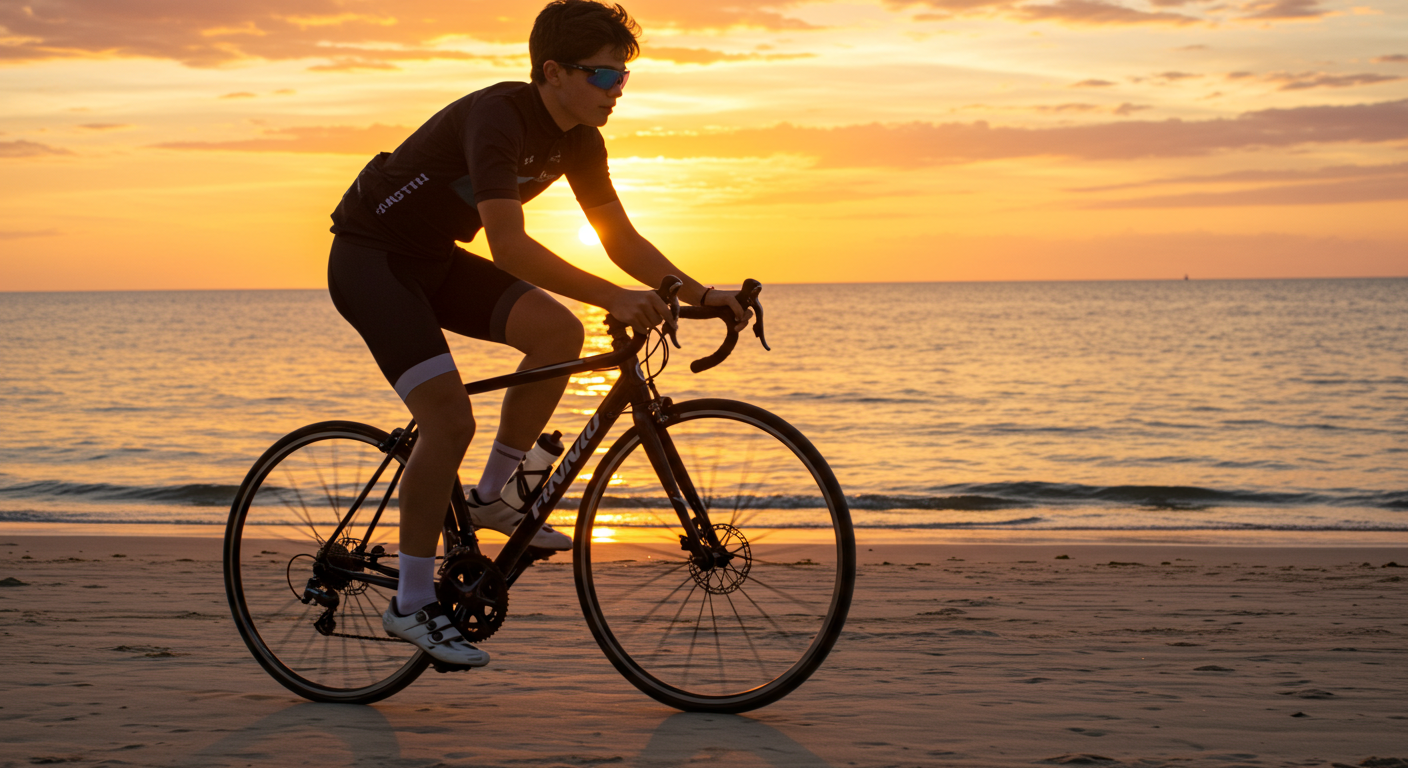
Staring at bike rental options and trying to decode bike vs e-bike vs trike is more common than you’d think. A bike is pedal-only, an e-bike adds electric help, and a trike gives you three wheels for extra stability. The real question is which one fits your vacation, your comfort level, and the way you actually want to spend your days in Naples or Marco Island.
Bike vs E-Bike vs Trike: What’s the Simple Difference?
The simplest way to think about it is this: a regular bike gives you the classic ride, an e-bike gives you help, and a trike gives you support.
If you picture them like walking, walking with a moving sidewalk, and walking with a wider, steadier stance, you’re pretty close. All three can be great on a Florida vacation. They just solve different problems.
A traditional bike is usually best when you want something easy, active, and budget-friendly. An e-bike makes more sense when you want to go farther, keep up with someone else, or avoid arriving hot and tired. A trike is the comfort-first choice for people who care most about balance, confidence, and a relaxed pace.
That’s really the whole article in four sentences. But the details matter, especially if you’re booking before you arrive and don’t want to guess wrong.
What Each Option Actually Is
Traditional bike
A traditional bike is the standard two-wheel bicycle most people already know. No battery, no motor, no special controls. You pedal, and the bike moves.
That simplicity is a big part of the appeal. It feels familiar, it’s usually the easiest rental to understand, and it often costs the least per day. For flat vacation areas, short rides, and people who actually enjoy a bit of movement, a regular bike still makes a lot of sense.
It’s also the least fussy option. There’s no battery range to think about, no assist settings to learn, and no extra weight from a motor system. You hop on and ride.
E-bike
An e-bike is still a bicycle, just with a battery and motor that help you ride. On most rentals, you still pedal, but the motor gives you assist so each pedal stroke feels easier. Some models also have a throttle, which can help you start moving or cruise with less effort.
Here’s the part many first-time renters get wrong: e-bike does not mean effortless. You’re usually still riding like a cyclist, just with the volume turned down on the hard parts. Headwind, heat, longer distances, and little bridges feel much more manageable.
That’s why so many vacationers end up loving them. If you want the fun of biking without the full workout, an e-bike hits that middle ground really well. If you want a deeper look at how much difference the assist actually makes, this breakdown of what changes when you upgrade from a standard ride helps spell it out.
Trike
A trike has three wheels instead of two, and that changes the experience immediately. The main benefit is stability. You don’t have to balance the same way you do on a bike, especially when starting, stopping, or riding slowly.
Most people hear “trike” and picture one very specific style, but rental fleets can vary. Some offer pedal trikes, some offer electric trikes, and some have larger models built more for comfort and carrying capacity than speed. So before booking, it’s smart to confirm what kind of trike you’re actually reserving.
In general, though, a trike is built for balance, comfort, and confidence. It’s less about zipping around and more about feeling planted and relaxed.
The Biggest Differences at a Glance
Two wheels vs. three wheels
Two wheels feel nimble. They turn more tightly, fit into smaller spaces, and feel familiar if you’ve ridden before. That’s true for both regular bikes and most e-bikes.
Three wheels feel steadier. That matters most at low speed, when stopping at crossings, or when you’re not fully confident getting on and off. A trike can feel less twitchy and less demanding, especially for riders who haven’t been on anything with pedals in years.
The trade-off is that trikes are usually wider and less agile. You gain stability, but you give up some maneuverability.
Pedal power vs. motor assist
A regular bike gives you exactly what you put in. If the route is short and flat, that can feel great. If it’s hot, you’re riding for hours, or you’re trying to keep pace with a stronger rider, it can start to feel like work.
An e-bike softens all of that. You’re still engaged, but not as taxed. Think of it like having a tailwind on command. You can ride longer, arrive less sweaty, and enjoy the scenery without making every mile a fitness test.
A trike reduces balance demands more than physical effort, though electric trikes obviously help on both fronts. If the biggest issue is not stamina but feeling unsteady, a trike can be the better fix.
Stability, comfort, and confidence
This is where most undecided renters make their choice.
If you’re comfortable balancing on two wheels and haven’t had issues in the past, a regular bike or e-bike will probably feel natural after a minute or two. If you’re rusty, nervous, or worried about wobbling at stops, a trike can remove a lot of that mental friction.
Confidence matters more than people admit. A vehicle can be technically “better” on paper, but if you’re tense the whole time, it’s the wrong one for your trip. That’s one reason many visitors compare which ride feels easier and less intimidating in real life before they book.
How They Feel on Vacation Roads and Paths
Best for short, easy rides
A traditional bike is often enough for quick outings around beach areas, neighborhoods, and casual local routes. If your plan is to pedal to breakfast, cruise a scenic street, or take a short sunset ride, you may not need anything more.
This is especially true in flatter coastal areas where the ride itself is part of the fun. You’re not trying to cover huge distances. You just want a simple, easygoing way to get around.
For active travelers, that’s part of the charm. The ride feels clean and uncomplicated.
Best for covering more ground with less effort
E-bikes shine when the day involves more than a quick spin. They’re ideal for sightseeing loops, hopping between spots, riding in warm weather, or spending hours out without draining yourself in the first hour.
They’re also great for pairs or groups with uneven stamina. One person wants to pedal all day, the other likes the idea of biking but not the exhaustion. An e-bike closes that gap fast.
That’s why they’ve become such a popular vacation option. If your trip involves moving around without relying on the car, it helps to read up on easy ways to explore the island at your own pace and see where an e-bike fits.
Best for relaxed, steady cruising
Trikes work best when you want a ride that feels calm and secure. They’re a strong choice for slow sightseeing, stop-and-go areas, and outings where comfort matters more than speed.
They also tend to be handy if you’re carrying personal items, towels, small bags, or a few things you picked up along the way. Not every model has the same cargo setup, but trikes often feel more practical when you want space and stability together.
The pace is different, though. You’re usually not hopping on a trike to feel sporty. You’re doing it because you want the ride to feel easy and dependable.
Fitness, Balance, and Comfort: Which One Matches You?
Choose a bike if you like a more active ride
Pick a regular bike if you enjoy pedaling and don’t mind earning the ride a little. It fits travelers who are reasonably comfortable on two wheels, feel fine balancing, and like the simplicity of a classic bicycle.
There’s also something satisfying about it. No battery to watch, no settings to adjust, no learning curve beyond “does the seat height feel right?” If your body feels good and your routes are modest, this is often all you need.
And honestly, for many short vacation rides, a regular bike is the cleanest answer.
Choose an e-bike if you want help, not a workout
An e-bike is the sweet spot for a lot of visitors. You still get the open-air feel and freedom of a bike, but without so much effort that the ride dominates the day.
This is especially useful if you want to explore more, handle heat better, or avoid showing up to lunch feeling like you just finished spin class. It’s also a smart fix for couples with different fitness levels. One person can ride a standard bike, the other can use assist, and both can still enjoy the same outing.
If you’re on the fence, reading a quick guide to deciding if electric assist makes sense for your trip can help narrow it down.
Choose a trike if balance or confidence is the main concern
Choose a trike if your biggest hesitation is balance, not distance. Maybe you haven’t ridden in years. Maybe getting started and stopping feels stressful. Maybe you just want the most planted, comfortable option and don’t care if it’s a little slower.
That’s not “settling.” It’s choosing the ride you’ll actually enjoy.
A lot of people waste money by renting the thing that sounds coolest instead of the thing that feels best. If a trike makes you more likely to relax and ride, then it’s probably the right call.
Cost, Speed, and Practical Trade-Offs
Rental cost and value
Traditional bikes are usually the least expensive option. E-bikes typically cost more because you’re paying for the motor, battery, and the extra convenience they bring. Trike pricing can vary quite a bit depending on whether it’s a basic pedal trike, an electric model, or something larger.
But daily price alone can be misleading. The cheapest rental is not automatically the best value if you end up too tired to use it much, or if it doesn’t fit your comfort level and sits parked half the trip.
Good value means matching the rental to the way you actually vacation. If you’re weighing price carefully, it helps to check what bike rentals usually cost before you book so you can compare with a realistic baseline.
Speed and range
Regular bikes can be quick enough on short, flat routes, but your pace depends entirely on your legs. E-bikes usually cover more ground more comfortably, especially over the course of a full day. You don’t just go faster, you maintain your pace more easily.
Trikes tend to be slower and more relaxed. That’s not a flaw. It’s just a different kind of ride.
Range matters too. On a regular bike, your limit is mostly your energy. On an e-bike, it’s your energy plus battery life, though for typical vacation riding that’s often plenty. On a trike, your practical range usually comes down to comfort and pace rather than top speed.
Storage, carrying capacity, and convenience
This is one of those details people forget until they’re actually out riding with towels, water bottles, snacks, and a beach bag.
Trikes often do well here because they can offer more room for personal items and feel steadier with cargo. Standard bikes and e-bikes can still carry what you need, especially with baskets or racks, but they’re often easier to park, turn, and maneuver through tighter areas.
So the better choice depends on what you value more: carrying capacity or nimbleness. For some trips, one backpack solves everything. For others, extra storage makes the whole day easier.
Which One Works Best for Your Travel Group?
Couples with different fitness levels
This is probably the most common real-world scenario. One person says, “A bike sounds fun.” The other is already picturing sore legs and sweat.
An e-bike often solves that mismatch. It lets one rider get assistance while the stronger rider still enjoys a normal ride. In many cases, a bike-plus-e-bike combo works better than renting the same thing for both people just for symmetry.
Matching pace matters more than matching equipment. If one person is struggling, nobody has fun for long.
Families and multigenerational groups
Mixed-age groups need comfort more than anything. The trip works better when everyone has a ride they feel good on, even if the group isn’t moving at the exact same speed.
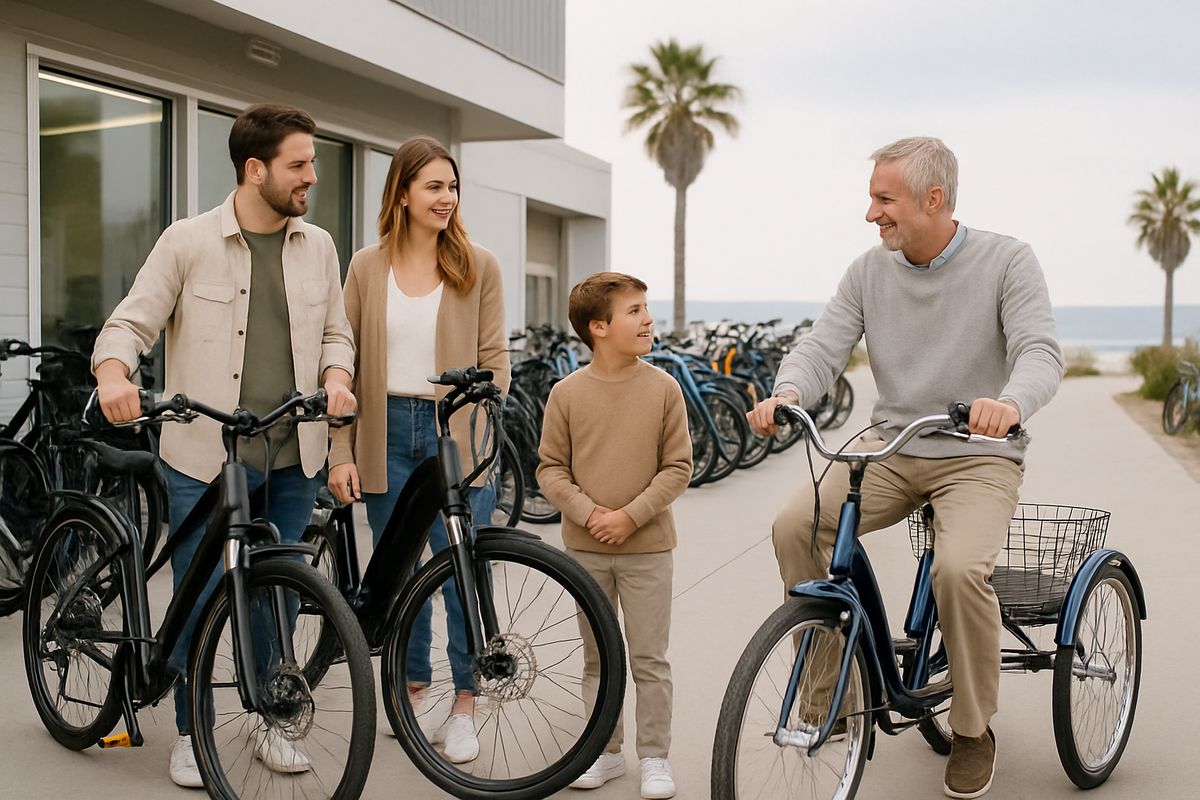
For some adults, a trike adds the confidence they need to join in. More confident riders may prefer standard bikes or e-bikes, especially if they want more range or a livelier feel. The best setup is usually the one that keeps the group together without making anyone anxious or exhausted.
That’s especially true on vacation, where the goal is enjoying the day, not proving a point.
Solo travelers and easygoing explorers
If you’re renting for one, the choice gets easier. Start with your goal.
If you want exercise and simple transportation, go with a bike. If you want scenic cruising, longer loops, and less effort, go with an e-bike. If you want maximum comfort and the easiest onboard feel, go with a trike.
Before reserving anything, it’s worth reviewing what first-time renters usually wish they knew in advance. A little prep can save a lot of second-guessing.
Common Misconceptions About Bikes, E-Bikes, and Trikes
“An e-bike does all the work for you”
Not really. Most e-bikes still involve pedaling. The difference is that the bike helps, and you can usually choose how much.
Low assist feels closer to a regular bike. Higher assist feels much easier, especially when starting or dealing with heat and distance. So yes, it’s less effort, but it’s usually not zero effort.
“A trike is only for older riders”
This one needs to go away.
Trikes are for anyone who wants more stability, easier carrying, or a more relaxed ride. That includes older adults, sure, but also nervous riders, people recovering confidence, and vacationers who just want something steady and comfortable.
Choosing comfort is not an age issue. It’s a preference.
“A regular bike is always the best value”
Only if it works for you.
If a regular bike costs less but leaves you too tired to enjoy the day, or makes it hard to keep up with your group, then it wasn’t really the best deal. Sometimes paying more for an e-bike or choosing a trike you’ll actually feel confident on gives you far more value from the trip.
The smart rental is the one you’ll use happily, not the one with the lowest number next to it.
A Simple Way to Choose the Right Rental
Ask yourself these 5 questions
If you’re stuck, use these five questions:
- How far do you actually want to ride?
- How comfortable are you balancing on two wheels?
- Do you want exercise or easy cruising?
- Are you riding solo or trying to match someone else’s pace?
- Do you need room for bags, beach gear, or personal items?
That framework usually clears things up fast. Long distances and heat push many people toward e-bikes. Balance concerns point toward trikes. Short, active rides point toward regular bikes.
If you already know your dates and want to lock things in early, you can reserve your rental ahead of arrival and avoid scrambling once you’re in town.
Quick recommendations by vacation style
Here’s the fast version.
Choose a bike for short rides, casual beach trips, and active outings where pedaling is part of the fun. Choose an e-bike for longer sightseeing days, warm-weather exploring, and mixed-ability groups. Choose a trike for maximum stability, easier starts and stops, and comfort-first cruising.
Simple beats complicated here. Don’t rent for the version of the trip you imagine in perfect weather with unlimited energy. Rent for the trip you’re actually going to take.
FAQs About Choosing Between a Bike, E-Bike, and Trike
Is an e-bike harder to ride than a regular bike?
Usually no. It feels familiar pretty quickly, especially if you already know how to ride a regular bike. The main adjustment is the extra weight and the quicker acceleration when assist kicks in, but most riders settle in after a short test ride.
Is a trike safer than a bike?
A trike often feels more stable, especially at low speeds and when stopping or starting. That said, “safer” depends on the rider, the route, traffic, and how comfortably the vehicle fits your skill level. A confident rider on the right rental is usually in the best position.
What’s best for someone who hasn’t ridden in years?
If balance is the main concern, a trike is usually the easiest choice. If balancing still feels okay but pedaling sounds tiring, an e-bike can be a great middle ground. A regular bike works well if you’re rusty but still comfortable on two wheels.
Can couples rent different types and still ride together?
Yes, and honestly, that often works better than renting the same thing. One person may want a workout while the other wants assist or extra stability. Matching your pace matters much more than matching your rental type.
Is an e-bike worth the extra money on vacation?
Often, yes, especially if you want to ride more than once, cover more ground, or avoid getting worn out in the heat. The extra cost can be worth it if it turns a short ride into an all-day part of your vacation.
Which rental is best for beach cruising and casual sightseeing?
For easy beach cruising, a regular bike is great if you like pedaling and plan to stay local. An e-bike is better for longer sightseeing loops and more time out. A trike is best if you want the calmest, steadiest ride with less worry about balance.
The right rental is the one that makes you think less and enjoy more. If you want simple: choose a bike for active short rides, an e-bike for easy exploration, and a trike for comfort and confidence.